Back to News
News

The secret of twin planetary mixers handling high-viscosity materials: an in-depth analysis of planetary blade design and tank scraping technology
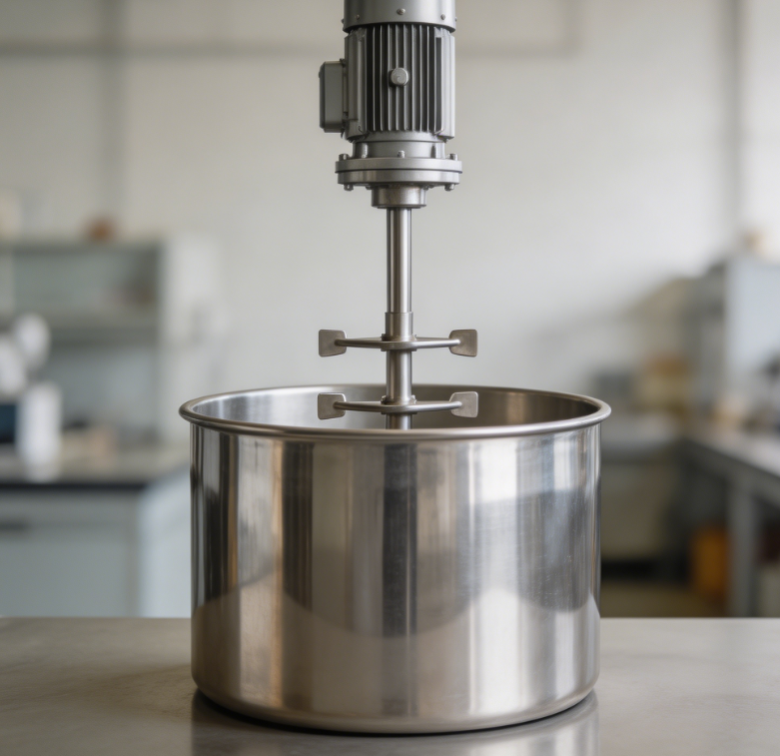
May 22, 2026
The secret of twin planetary mixers handling high-viscosity materials: an in-depth analysis of planetary blade design and tank scraping technology

<h2 style="text-align: left;"><span style="font-size: 18pt;"><strong>Table of Contents</strong></span></h2><p style="text-align: left;"><span style="font-size: 12pt;">1. Bottlenecks of High Viscosity Material Mixing</span></p><p style="text-align: left;"><span style="font-size: 12pt;">2. Working Principle of Double Planetary Mixer</span></p><p style="text-align: left;"><span style="font-size: 12pt;">3. Planetary Stirring Blade: Structural Design &amp; Mixing Logic</span></p><p style="text-align: left;"><span style="font-size: 12pt;">3.1 Common Blade Types for Viscous Materials</span></p><p style="text-align: left;"><span style="font-size: 12pt;">3.2 Blade Angle and Speed Matching Rules</span></p><p style="text-align: left;"><span style="font-size: 12pt;">4. Tank Scraping Technology: Eliminate Wall Residue Defects</span></p><p style="text-align: left;"><span style="font-size: 12pt;">4.1 Core Mechanism of Tank Scraping System</span></p><p style="text-align: left;"><span style="font-size: 12pt;">4.2 Material Selection for Scraping Blades</span></p><p style="text-align: left;"><span style="font-size: 12pt;">5. Performance Contrast Test Data</span></p><p style="text-align: left;"><span style="font-size: 12pt;">6. Industrial Application Scenarios</span></p><p style="text-align: left;"><span style="font-size: 12pt;">7. Frequently Asked Questions (FAQs)</span></p><h1 style="text-align: left;"><span style="font-size: 24pt;"><strong>1. Bottlenecks of High Viscosity Material Mixing</strong></span></h1><p style="text-align: left;"><span style="font-size: 12pt;">High viscosity pastes, adhesives and silicone slurries always bring tough mixing problems to manufacturers. Material flowability drops sharply when viscosity exceeds 10,000 mPa·s.</span></p><p style="text-align: left;"><span style="font-size: 12pt;">Dead mixing zones, tank wall adhesion and uneven dispersion are the most common failure points in traditional mixing equipment. Ordinary single-shaft mixers cannot generate enough shear force to break viscous material agglomerations.</span></p><p style="text-align: left;"><span style="font-size: 12pt;">According to 2025 industrial statistics, over 62% of high viscosity material mixing defects are caused by unreasonable blade structure and incomplete tank wall cleaning. This makes double planetary mixer become mainstream equipment for viscous production lines.</span></p><h1 style="text-align: left;"><span style="font-size: 24pt;"><strong>2. Working Principle of Double Planetary Mixer</strong></span></h1><p style="text-align: left;"><span style="font-size: 12pt;">Double planetary mixer relies on dual revolution and rotation motion to realize three-dimensional mixing. Two groups of stirring components move around the tank center while rotating at high speed.</span></p><p style="text-align: left;"><span style="font-size: 12pt;">This motion mode produces strong shear, extrusion and turbulent force. It perfectly adapts to high viscosity material mixing without adding extra dilution solvent.</span></p><p style="text-align: left;"><span style="font-size: 12pt;">Different from static mixing machines, this equipment combine planetary stirring blade and tank scraping technology as core configurations. The two structures cooperate to improve mixing uniformity and reduce material waste.</span></p><h1 style="text-align: left;"><span style="font-size: 24pt;"><strong>3. Planetary Stirring Blade: Structural Design &amp; Mixing Logic</strong></span></h1><h2 style="text-align: left;"><span style="font-size: 18pt;"><strong>3.1 Common Blade Types for Viscous Materials</strong></span></h2><p style="text-align: left;"><span style="font-size: 12pt;">Three mainstream blade types are widely used in industrial production: frame type, butterfly type and serrated type. Each blade fit different viscosity ranges.</span></p><p style="text-align: left;"><span style="font-size: 12pt;">Frame planetary stirring blade have large contact area. It suit ultra-high viscosity materials above 50,000 mPa·s, such as thermal conductive silicone and epoxy resin.</span></p><p style="text-align: left;"><span style="font-size: 12pt;">Butterfly blades own flexible flow guiding performance. It is more suitable for medium viscosity materials like battery slurry and cosmetic ointment.</span></p><h2 style="text-align: left;"><span style="font-size: 18pt;"><strong>3.2 Blade Angle and Speed Matching Rules</strong></span></h2><p style="text-align: left;"><span style="font-size: 12pt;">Blade inclination angle directly affect material turnover efficiency. Most manufacturers set 15° to 30° inclination for high viscosity mixing.</span></p><p style="text-align: left;"><span style="font-size: 12pt;">Revolution speed keep at 20-40 r/min, while rotation speed maintain 60-120 r/min. Speed difference form strong interlayer shear force to crush viscous material clusters.</span></p><p style="text-align: left;"><span style="font-size: 12pt;">Unreasonable angle will cause material accumulation at tank bottom. This defect account for 28% of mixing failure in actual production.</span></p><h1 style="text-align: left;"><span style="font-size: 24pt;"><strong>4. Tank Scraping Technology: Eliminate Wall Residue Defects</strong></span></h1><h2 style="text-align: left;"><span style="font-size: 18pt;"><strong>4.1 Core Mechanism of Tank Scraping System</strong></span></h2><p style="text-align: left;"><span style="font-size: 12pt;">High viscosity materials easily adhere to tank inner wall due to high surface tension. Static adhesion layer cannot be touched by ordinary stirring blades.</span></p><p style="text-align: left;"><span style="font-size: 12pt;">Tank scraping technology install independent scraping components synchronously moving with stirring shafts. The scraper fit closely with tank wall to peel off adhered materials in real time.</span></p><p style="text-align: left;"><span style="font-size: 12pt;">It realize cyclic mixing of wall materials and central materials. No dead angle exists in the whole mixing tank.</span></p><h2 style="text-align: left;"><span style="font-size: 18pt;"><strong>4.2 Material Selection for Scraping Blades</strong></span></h2><p style="text-align: left;"><span style="font-size: 12pt;">Silicone rubber and PTFE are the two most common scraper materials. Silicone rubber has good flexibility for medium viscosity food and cosmetic materials.</span></p><p style="text-align: left;"><span style="font-size: 12pt;">PTFE scraper own high temperature resistance and corrosion resistance. It match chemical slurry and industrial adhesive production scenarios.</span></p><h1 style="text-align: left;"><span style="font-size: 24pt;"><strong>5. Performance Contrast Test Data</strong></span></h1><p style="text-align: left;"><span style="font-size: 12pt;">The table below shows actual test data of different configurations under 35,000 mPa·s viscosity material (polyurethane adhesive). All test parameters adopt industrial standard calibration.</span></p><table style="min-width: 125px;"><colgroup><col style="min-width: 25px;"><col style="min-width: 25px;"><col style="min-width: 25px;"><col style="min-width: 25px;"><col style="min-width: 25px;"></colgroup><tbody><tr><td colspan="1" rowspan="1"><p style="text-align: left;"><span style="font-size: 10pt;">Configuration Mode</span></p></td><td colspan="1" rowspan="1"><p style="text-align: left;"><span style="font-size: 10pt;">Mixing Uniformity</span></p></td><td colspan="1" rowspan="1"><p style="text-align: left;"><span style="font-size: 10pt;">Tank Wall Residue Rate</span></p></td><td colspan="1" rowspan="1"><p style="text-align: left;"><span style="font-size: 10pt;">Mixing Time (min)</span></p></td><td colspan="1" rowspan="1"><p style="text-align: left;"><span style="font-size: 10pt;">Energy Consumption (kWh)</span></p></td></tr><tr><td colspan="1" rowspan="1"><p style="text-align: left;"><span style="font-size: 10pt;">Single Blade Without Scraping</span></p></td><td colspan="1" rowspan="1"><p style="text-align: left;"><span style="font-size: 10pt;">83.2%</span></p></td><td colspan="1" rowspan="1"><p style="text-align: left;"><span style="font-size: 10pt;">7.85%</span></p></td><td colspan="1" rowspan="1"><p style="text-align: left;"><span style="font-size: 10pt;">28</span></p></td><td colspan="1" rowspan="1"><p style="text-align: left;"><span style="font-size: 10pt;">4.26</span></p></td></tr><tr><td colspan="1" rowspan="1"><p style="text-align: left;"><span style="font-size: 10pt;">Dual Planetary Blade Without Scraping</span></p></td><td colspan="1" rowspan="1"><p style="text-align: left;"><span style="font-size: 10pt;">92.7%</span></p></td><td colspan="1" rowspan="1"><p style="text-align: left;"><span style="font-size: 10pt;">4.12%</span></p></td><td colspan="1" rowspan="1"><p style="text-align: left;"><span style="font-size: 10pt;">21</span></p></td><td colspan="1" rowspan="1"><p style="text-align: left;"><span style="font-size: 10pt;">3.51</span></p></td></tr><tr><td colspan="1" rowspan="1"><p style="text-align: left;"><span style="font-size: 10pt;">Dual Blade + Tank Scraping Technology</span></p></td><td colspan="1" rowspan="1"><p style="text-align: left;"><span style="font-size: 10pt;">98.5%</span></p></td><td colspan="1" rowspan="1"><p style="text-align: left;"><span style="font-size: 10pt;">0.83%</span></p></td><td colspan="1" rowspan="1"><p style="text-align: left;"><span style="font-size: 10pt;">14</span></p></td><td colspan="1" rowspan="1"><p style="text-align: left;"><span style="font-size: 10pt;">2.87</span></p></td></tr></tbody></table><h1 style="text-align: left;"><span style="font-size: 24pt;"><strong>6. Industrial Application Scenarios</strong></span></h1><p style="text-align: left;"><span style="font-size: 12pt;">Double planetary mixer widely serve new energy industry. Battery electrode slurry with high viscosity need precise blade shearing and wall scraping to avoid raw material waste.</span></p><p style="text-align: left;"><span style="font-size: 12pt;">Chemical adhesive production also rely on this equipment. Tank scraping technology ensure zero dead angle mixing for high viscosity glue.</span></p><p style="text-align: left;"><span style="font-size: 12pt;">Cosmetic cream and pharmaceutical ointment adopt food-grade scraping blades. It meet hygiene standards while maintaining mixing fineness.</span></p><h1 style="text-align: left;"><span style="font-size: 24pt;"><strong>7. Frequently Asked Questions (FAQs)</strong></span></h1><p style="text-align: left;"><span style="font-size: 12pt;"><strong>Q1: What viscosity range is suitable for double planetary mixer?</strong></span></p><p style="text-align: left;"><span style="font-size: 12pt;">A1: It can stably handle materials from 5,000 mPa·s to 200,000 mPa·s. It cover most high viscosity industrial slurries, pastes and adhesives.</span></p><p style="text-align: left;"><span style="font-size: 12pt;"><strong>Q2: Why planetary stirring blade is better than ordinary straight blade?</strong></span></p><p style="text-align: left;"><span style="font-size: 12pt;">A2: The inclined curved structure generate multi-directional shear force. It break material agglomerations more efficiently, and avoid bottom accumulation of viscous materials.</span></p><p style="text-align: left;"><span style="font-size: 12pt;"><strong>Q3: Can tank scraping technology completely eliminate wall residue?</strong></span></p><p style="text-align: left;"><span style="font-size: 12pt;">A3: Under standard working condition, residue rate can be controlled below 1%. Regular replacement of worn scraper strips keep long-term stable cleaning effect.</span></p><p style="text-align: left;"><span style="font-size: 12pt;"><strong>Q4: How to maintain mixing efficiency for long-term operation?</strong></span></p><p style="text-align: left;"><span style="font-size: 12pt;">A4: Clean blades and scraper after each batch. Calibrate blade inclination angle every three months to prevent mixing dead zones.</span></p>

Share this article: